


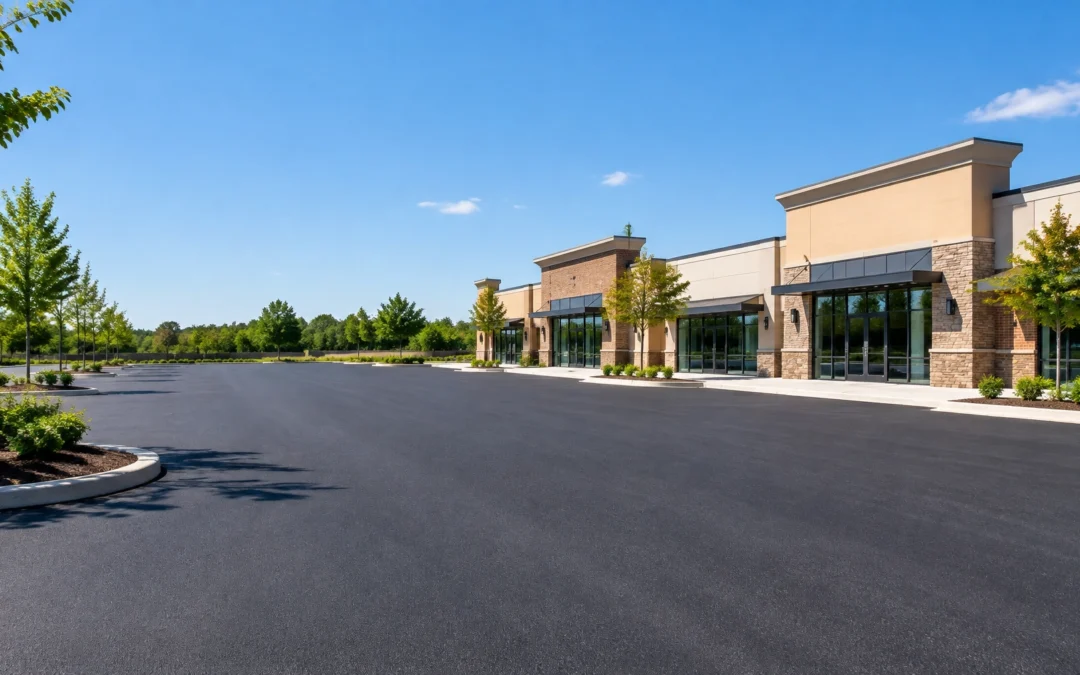
Durable Asphalt Parking Lots Built for the Demands of Your Business
A commercial parking lot is more than a place to park vehicles. It provides access to your property, supports daily business operations, and creates an important first impression for customers, tenants, employees, and visitors.
When asphalt begins cracking, developing potholes, or collecting standing water, those problems can affect safety, accessibility, maintenance expenses, and the overall condition of your property.
Titan Paving and Masonry Corp. provides commercial parking lot paving services throughout Union, Middlesex, Essex, Somerset, Morris, and Monmouth Counties in New Jersey.
As a third-generation paving and masonry company, Titan understands the importance of proper site preparation, sound construction practices, and selecting the right paving solution for each property.
Whether you are planning a new asphalt parking lot, replacing deteriorated pavement, or evaluating whether resurfacing makes financial sense, Titan can help you discuss your options.
Call 201-456-6767 to request a free commercial parking lot paving estimate.
Is Your Commercial Parking Lot Costing You More Than It Should?
An aging parking lot can create expenses and operating problems that go beyond the pavement itself.
Minor cracks may eventually develop into potholes. Poor drainage can accelerate pavement deterioration. Uneven surfaces can create problems for vehicles and pedestrians. Repeated patching may become increasingly expensive without addressing the underlying cause.
Recognizing these problems early can help property owners make better decisions about maintenance, repair, or replacement.
Potholes and Deteriorating Asphalt
Potholes form when pavement weakens and breaks apart, frequently because water enters cracks and compromises the underlying materials. Vehicle traffic and New Jersey's freeze-thaw cycles can make the damage worse.
For commercial property owners, potholes may create vehicle damage concerns, potential liability exposure, and an unfavorable impression of the property.
Repairing isolated potholes may be appropriate when the surrounding pavement remains structurally sound. Widespread potholes, however, may indicate that more extensive work is needed.
Cracking Throughout the Parking Lot
Small surface cracks do not necessarily mean an entire parking lot needs replacement. However, extensive interconnected cracking, sometimes called alligator cracking, can indicate that the pavement structure or underlying base is failing.
Simply covering serious structural problems with new asphalt may not provide a lasting solution. Understanding the cause of cracking is essential before deciding whether to repair, resurface, or replace the pavement.

Standing Water and Drainage Problems
Water that remains on a parking lot after rainfall can be more than an inconvenience. Poor drainage can contribute to asphalt deterioration, surface damage, and weakening of the pavement base.
During winter, standing water may freeze and create additional hazards. A commercial paving evaluation should consider the existing slope, drainage patterns, and whether water is contributing to recurring pavement problems.
Uneven Pavement and Surface Settlement
Depressions, uneven surfaces, and settled sections of asphalt may interfere with traffic flow, loading operations, and pedestrian access.
These conditions sometimes result from problems beneath the asphalt rather than surface wear alone. Identifying the cause of settlement helps determine whether a localized repair or more extensive reconstruction is appropriate.
Repeated Repairs and Rising Maintenance Costs
Patching a parking lot can make good financial sense when the damaged areas are limited. However, repeatedly repairing a parking lot that continues to deteriorate may become less economical than investing in a more comprehensive paving project.
The goal is not necessarily to choose the least expensive repair today. It is to choose a solution that makes financial sense over the expected life of the pavement.
Should You Repair, Resurface, or Replace Your Commercial Parking Lot?
One of the most important decisions facing a commercial property owner is determining how much paving work is actually necessary.
A complete replacement is not always required. On the other hand, resurfacing severely damaged pavement may postpone rather than solve the problem.
The right decision depends on existing pavement conditions, the stability of the foundation, drainage, traffic loads, and the extent of deterioration.
Commercial Asphalt Repairs
Repairs are generally appropriate when damage is isolated and most of the parking lot remains in satisfactory condition. Examples include individual potholes, localized cracking, or limited areas of failed asphalt.
Damaged sections may need to be removed and reconstructed rather than simply covered.
Best suited for: Parking lots with limited, localized damage and a generally sound surrounding pavement structure.
Commercial Parking Lot Resurfacing
Resurfacing typically involves preparing the existing asphalt and installing a new layer of pavement over a suitable existing surface.
It can improve appearance, restore surface condition, and extend pavement service life when the underlying pavement remains stable. However, an asphalt overlay cannot reliably correct extensive base failure or serious drainage problems without additional work.
Best suited for: Parking lots with aging or worn surfaces but a substantially sound pavement foundation.
Full-Depth Asphalt Replacement
When asphalt damage extends into the pavement structure, removing and reconstructing affected areas may be necessary.
Full-depth replacement can involve removing existing asphalt, addressing unsuitable base materials, correcting grading where needed, and installing new pavement.
This is generally more extensive than resurfacing but may be the more appropriate long-term investment when the existing pavement has significant structural problems.
Best suited for: Parking lots with widespread structural deterioration, extensive base failure, or damage that cannot be adequately corrected through resurfacing.
New Commercial Parking Lot Construction
New parking lot construction begins with evaluating how the property will be used. Important considerations include vehicle traffic, heavy truck loads, drainage, pavement thickness, grading, and access requirements.
A parking area serving passenger vehicles may require a different pavement design from one regularly used by delivery trucks or heavy commercial vehicles. Proper planning helps ensure that the completed lot is appropriate for its intended use.
Not sure which option makes sense? Contact Titan Paving and Masonry Corp. at 201-456-6767 to discuss your parking lot's condition and request a free estimate.
How Commercial Parking Lot Paving Works
A successful parking lot paving project involves more than placing a new layer of asphalt. The condition of the ground beneath the pavement, drainage, traffic demands, and preparation work all influence long-term performance.
Although every project is different, commercial paving generally involves the following steps.
1. Property Evaluation and Project Planning
The first step is understanding the property and the work being considered. Important questions include:
- Is the parking lot being constructed, resurfaced, or replaced?
- Are there existing drainage problems?
- How much heavy vehicle traffic does the property receive?
- Are there visibly damaged or unstable sections?
- What areas must remain accessible during construction?
- Are there property-specific operational or access requirements?
These considerations help establish the appropriate scope of work and provide a basis for estimating the project.
2. Removal and Site Preparation
Depending on the project, preparation may involve removing damaged asphalt, excavating unsuitable material, adjusting elevations, or preparing an existing surface for resurfacing.
Proper preparation matters because installing new asphalt over an unstable foundation can allow existing problems to return. Preparation requirements should be determined by the actual condition of the site rather than assuming every parking lot needs the same work.
3. Grading, Base Preparation, and Drainage
The base beneath an asphalt parking lot supports the pavement and helps distribute the weight of traffic.
When the base becomes unstable or water is trapped beneath the surface, pavement can crack, sink, and deteriorate. Grading also matters because parking lots need appropriate slopes to direct water toward suitable drainage locations.
The amount of base preparation required depends on soil conditions, existing pavement structure, and the intended use of the property.
4. Asphalt Installation and Compaction
After the necessary preparation, asphalt is placed and compacted. The required pavement thickness and construction details depend on factors such as vehicle weights, traffic frequency, foundation conditions, and the project's design.
Proper compaction is important because it contributes to pavement density, stability, and performance. Commercial parking lots that experience regular heavy-truck traffic may need more substantial pavement construction than areas used primarily for passenger vehicles.

5. Final Review and Reopening
Before a newly paved area is returned to service, the completed work and applicable reopening requirements should be reviewed.
The time before traffic can return depends on factors such as pavement temperature, asphalt thickness, weather, vehicle weights, and the type of work completed. Commercial property owners should obtain specific instructions for their project rather than assuming that every parking lot can reopen after the same amount of time.
Commercial Properties That Benefit From Professional Parking Lot Paving
Different commercial properties place different demands on their pavement. Understanding how a parking lot is used helps determine the appropriate approach to construction, repair, and long-term maintenance.
Shopping Centers and Retail Plazas
Retail parking lots handle frequent vehicle movements, turning traffic, customer parking, deliveries, and pedestrian activity. Deteriorating asphalt can affect the customer's first impression and create difficulties in heavily traveled areas.
Planning is especially important when businesses need to remain accessible during paving work.
Warehouses and Distribution Centers
Warehouse properties may experience frequent heavy-truck traffic, deliveries, and concentrated loading activity. These demands can place greater stress on pavement than ordinary passenger vehicles.
Pavement design, turning areas, drainage, and the stability of the underlying base are especially important for these properties.
Industrial and Manufacturing Facilities
Industrial parking and access areas may serve a combination of employee vehicles, commercial trucks, and equipment. Traffic weights and recurring movement patterns should be considered when evaluating pavement thickness and construction requirements.
Office Buildings and Corporate Campuses
For office properties, parking lot condition affects daily employee access, visitor convenience, appearance, and property management. Paving work should account for employee traffic, available alternative parking, and operational needs.
Apartment Complexes and Condominium Communities
Multifamily properties require reliable parking and access for residents, visitors, deliveries, and service vehicles. Property managers and condominium associations may need to consider tenant notification, phased work, emergency access, and long-term maintenance budgets.
Medical Offices and Healthcare Facilities
Healthcare properties often require consistent access for patients, staff, and service vehicles. Pedestrian routes, accessible parking, vehicle circulation, and minimizing disruption are particularly important planning considerations.
Hotels and Hospitality Properties
Parking lot conditions contribute to the overall appearance and guest experience of hospitality properties. Paving plans should consider guest arrivals, deliveries, staff parking, and maintaining practical access throughout the work.
Why Proper Commercial Parking Lot Paving Is a Sound Business Investment
A parking lot is a physical asset that requires maintenance and eventual rehabilitation or replacement. When paving decisions are based on the property's actual needs, owners can better manage both immediate costs and future maintenance obligations.
1. Better Long-Term Pavement Performance
Proper preparation, appropriate pavement construction, effective drainage, and compaction all contribute to asphalt pavement performance. Addressing underlying problems before installing new asphalt may help prevent recurring failures.
2. Fewer Repeated Repair Problems
A well-planned paving project may reduce the need for repeated repairs caused by unresolved pavement deterioration. The actual maintenance savings depend on the condition of the property, the selected solution, traffic demands, and future upkeep.
3. Improved Property Safety
Potholes, depressions, uneven pavement, and drainage problems can create difficulties for drivers and pedestrians. Correcting these problems can help improve the condition and usability of parking and circulation areas.
Paving work should also consider applicable accessibility requirements. Asphalt installation alone does not establish that a property meets every applicable parking or accessibility standard.
4. Improved Appearance and Tenant Experience
A deteriorated parking lot can make an otherwise well-maintained property appear neglected. A smooth, properly finished asphalt surface contributes to a more professional appearance and a better experience for customers, tenants, employees, and visitors.
5. Better Planning Around Business Operations
Commercial paving should be planned with property operations in mind. Depending on the project, owners may need to consider:
- Customer and employee access
- Delivery schedules
- Temporary parking arrangements
- Work-area closures
- Tenant communication
- Emergency vehicle access
- Opportunities to complete work in phases
Planning for these issues in advance can help reduce avoidable disruption, although some temporary restrictions may still be necessary.
6. More Predictable Property Maintenance
Evaluating pavement condition and choosing an appropriate solution can help owners develop more realistic maintenance and capital improvement budgets.
Instead of responding only when damage becomes severe, property managers can plan necessary improvements based on condition, operational requirements, and available resources.
Example: Choosing the Right Solution for a Deteriorating Retail Parking Lot
The following is an illustrative example, not a description of an actual Titan project.
Consider a retail property in New Jersey with an aging asphalt parking lot. Several areas contain potholes, cracks appear throughout the surface, and water collects in certain sections after heavy rain. The owner has paid for multiple repairs, but new problems continue to develop.
The Problem
The owner needs to improve the lot's condition while avoiding unnecessary spending and keeping the retail businesses accessible.
The Evaluation
A paving contractor would need to examine the extent of cracking, the stability of the existing pavement, damaged areas, and drainage conditions. Some sections might have only surface deterioration, while others could have underlying structural problems.
The Possible Solution
If most of the existing pavement remains structurally sound, resurfacing combined with targeted full-depth repairs and necessary drainage corrections might be appropriate.
If the deterioration extends throughout the pavement structure, more extensive replacement may be the better long-term choice.
The Business Benefit
Selecting the appropriate approach can help the owner address existing damage, improve the parking lot's appearance and usability, and make a more informed investment.
The important lesson is that commercial parking lot paving should begin with understanding the problem rather than automatically choosing the cheapest repair or the most expensive replacement.
Commercial Parking Lot Paving Throughout Northern and Central New Jersey
Titan Paving and Masonry Corp. is based in Rutherford, New Jersey, and serves commercial property owners and managers across six New Jersey counties.
Union County
Commercial parking lot paving for property owners and managers throughout Union County, including retail, office, industrial, and multifamily properties.
Middlesex County
Commercial asphalt paving services for parking facilities serving businesses, warehouses, commercial buildings, and managed properties in Middlesex County.
Essex County
Parking lot paving and asphalt project estimates for commercial properties throughout Essex County.
Somerset County
Commercial paving services for office properties, business facilities, managed communities, and other commercial parking areas in Somerset County.
Morris County
Parking lot paving for commercial and multifamily properties throughout Morris County, including projects involving aging asphalt and pavement replacement needs.
Monmouth County
Commercial parking lot paving services for retail, office, hospitality, industrial, and other commercial properties in Monmouth County.
Have a commercial paving project in one of these counties? Call Titan at 201-456-6767 to request an estimate.
Frequently Asked Questions About Commercial Parking Lot Paving in New Jersey
How much does commercial parking lot paving cost in New Jersey?
Commercial parking lot paving costs depend on the size of the area, existing pavement conditions, amount of excavation or removal required, base preparation, drainage work, asphalt thickness, access, and other project requirements.
Resurfacing suitable existing pavement generally involves less reconstruction than a complete replacement, but it is not appropriate for every lot.
A site-specific estimate provides a more useful basis for budgeting than a general price per square foot. Contact Titan at 201-456-6767 to discuss your project and request a free estimate.
How do I know if my parking lot needs resurfacing or replacement?
If the existing pavement is structurally sound and deterioration is primarily at the surface, resurfacing may be appropriate.
Widespread alligator cracking, recurring potholes, settlement, and failed base materials can indicate that more extensive reconstruction is needed. A pavement evaluation helps determine whether repairs, resurfacing, partial reconstruction, or replacement is the better option.
How long does a commercial asphalt parking lot last?
Commercial asphalt parking lots are often planned around a service life of approximately 15 to 25 years, but actual performance varies considerably.
Traffic loads, pavement design, drainage, climate, installation quality, and maintenance all influence how long a parking lot remains serviceable. Some parking areas may require substantial work sooner, while well-designed and maintained pavement may perform longer.
No particular lifespan should be assumed without considering the property's conditions.
How long does commercial parking lot paving take?
Project duration depends on the lot's size, existing conditions, required demolition and preparation, drainage work, weather, and whether the project must be divided into stages.
A relatively straightforward resurfacing job may take much less time than full reconstruction. The contractor should discuss the anticipated schedule after evaluating the specific work required.
Can commercial parking lot paving be done without closing my entire business?
In some cases, commercial paving can be organized into phases so that portions of the property remain accessible.
However, this depends on the site layout, number of entrances, available parking, required construction work, and safety considerations. Some temporary closures or access restrictions may be unavoidable.
Businesses should discuss operational needs before construction begins.
What causes potholes and cracks in New Jersey parking lots?
Common causes include water infiltration, freeze-thaw cycles, repeated vehicle loads, pavement aging, inadequate drainage, and weaknesses in the underlying base.
Heavy commercial traffic may accelerate deterioration when pavement was not designed for those loads. Understanding the cause helps determine whether repairs will be sufficient.
How important is drainage when paving a commercial parking lot?
Drainage is a critical consideration in parking lot construction. Water that remains on the pavement or enters the underlying base can contribute to deterioration, settlement, and structural problems.
Proper grading and suitable drainage provisions help manage water and protect pavement performance.
How thick should asphalt be for a commercial parking lot?
Commercial asphalt thickness depends on traffic volume, vehicle weights, soil conditions, the pavement base, and the intended use of the area.
A parking lot primarily serving passenger cars may have different requirements from one serving frequent heavy trucks. There is no single asphalt thickness that is appropriate for every commercial property.
Can a commercial parking lot be paved in phases?
Yes, phased paving may be possible depending on property layout, traffic patterns, and project requirements.
Phasing can allow certain parking or access areas to remain available while work progresses elsewhere. However, phased construction may require additional coordination and may not be suitable for every site.
What should I compare when reviewing commercial paving estimates?
Look beyond the total quoted price. Important items include:
- The exact area and scope of work
- Whether existing asphalt will be removed or resurfaced
- Required excavation and base preparation
- Proposed asphalt materials and thickness
- Drainage corrections, if needed
- Work-area access and staging
- Project exclusions
- Payment terms and any written warranty provisions
Two paving estimates may have very different prices because they include different amounts of preparation or construction. Understanding what each contractor is proposing helps you compare the actual value of the work.
Why Consider Titan Paving and Masonry Corp.?
Commercial property owners need clear information, appropriate paving recommendations, and a contractor they can communicate with throughout the project.
Titan Paving and Masonry Corp. is a third-generation New Jersey paving and masonry business serving commercial and residential customers.
The company advertises asphalt paving and related services, including parking lot work, masonry, and drainage-related services.
For commercial property owners, that provides an opportunity to discuss pavement deterioration, site conditions, and related property concerns with a local contractor.
Whether you need a new parking lot or want to understand the options for an existing one, the first step is a conversation about the property's condition and your goals.
Request a Free Commercial Parking Lot Paving Estimate
A deteriorating parking lot does not improve by waiting, but choosing the right repair or replacement approach can help you avoid unnecessary work.
If you are considering commercial asphalt paving, resurfacing, or parking lot replacement in New Jersey, contact Titan Paving and Masonry Corp.
Discuss the existing condition of your property, the problems you want to resolve, and the paving work you are considering.
Request your free commercial parking lot paving estimate or call 201-456-6767.