


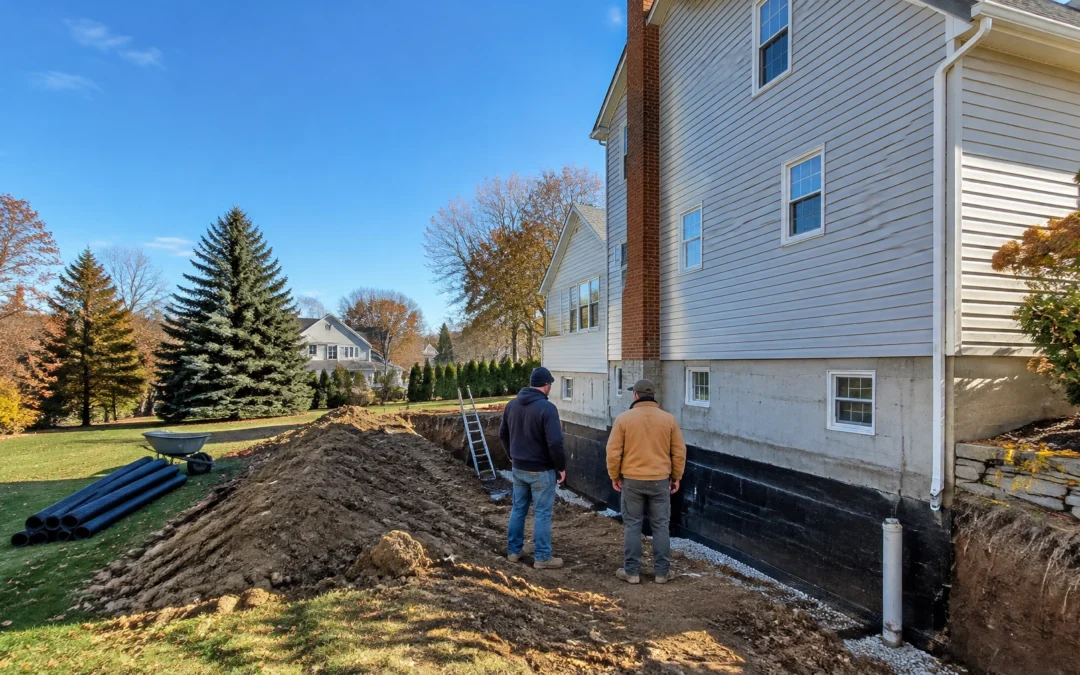
Not sure if your New Jersey basement needs waterproofing? Learn what causes basement moisture, when waterproofing is necessary, and how to protect your home from costly water damage.
Learn when basement waterproofing in NJ may be needed, how it differs from damp proofing, and what to check before winter rain.
If you’ve noticed a damp smell or a wet spot in your basement, it’s reasonable to wonder whether waterproofing is the answer. But not every home needs the same fix, and not every sign of moisture means there is a major foundation problem.
New Jersey’s fall rain and winter freeze-thaw cycles make this a good time to pay attention to basement conditions. The right next step is to identify where moisture is coming from and what is allowing it in. Titan Paving & Masonry is a third-generation, family-run company based in Rutherford, NJ. We help homeowners assess basement moisture concerns and discuss practical options based on the property.
Signs Worth Checking
Moisture can show up in several ways. You might see damp patches, water at the wall-floor joint, staining, a musty odor, or a white, powdery deposit on masonry. You may also notice that a basement feels humid, even when there’s no visible water.
These clues are worth investigating, especially if they appear after rainfall or return in the same location. But they don’t confirm the cause on their own. Water can enter through or around a foundation, while humidity and condensation can make surfaces feel damp without liquid water seeping through the wall.

Note where and when the moisture appears. Does it follow heavy rain? Is it limited to one wall or corner? Does it persist through dry weather? Those details can help a professional assess the situation. Photos can document a change, but they cannot establish the condition of a foundation or determine the right scope of work.
Waterproofing, Damp Proofing, and Drainage Are Different
These terms are related, but they are not interchangeable.
Damp proofing helps limit moisture moving through foundation materials. It can be appropriate in certain situations, but it is not necessarily a solution for water pressing against a wall or entering the basement.
Waterproofing is intended to provide a stronger barrier against water intrusion. The right materials and approach depend on the foundation, site, and source of moisture. A coating alone may not address water that is reaching the foundation because of poor surface drainage or groundwater pressure.
Foundation drainage is intended to manage water around or beneath the foundation and direct it along an appropriate path. The setup depends on the site and the building. Drainage may be considered alongside waterproofing when the assessment points to water accumulation as part of the problem.
The U.S. Department of Energy’s foundation guidance explains the role of drainage and waterproofing in foundation moisture control. The EPA’s moisture-control guidance also emphasizes managing moisture as part of a building-wide approach. In short: applying a product to a wall is not automatically a complete moisture-control plan.
Start With the Water’s Path
Before deciding on basement waterproofing in NJ, look at what happens outside the foundation. Gutters and downspouts should be clear and direct roof runoff away from the house where the site allows. Check whether soil, paving, or landscaping directs water toward the foundation. Also look for areas where water may collect near window wells or along the house.

A wet basement can have more than one contributing factor. Runoff near the foundation, groundwater, a leaking pipe, and indoor condensation call for different responses. Improving surface drainage may help when runoff is the issue, but it won’t necessarily resolve seepage from elsewhere. Similarly, damp proofing and drainage solutions address different parts of moisture control.
This is why an assessment matters. A contractor can review visible conditions, discuss when moisture appears, and consider the site before recommending a scope. That may lead to a focused correction or a broader waterproofing and drainage plan; visible staining alone is not a reason to assume the whole foundation needs replacement.
Why Check Before Winter?
Fall rain can reveal issues with runoff and drainage that were less noticeable in drier weather. As New Jersey moves through seasonal changes, moisture already entering masonry may also be affected by freeze-thaw cycles. That doesn’t mean a particular temperature automatically causes structural damage, or that every small crack requires rebuilding. It does mean recurring water is worth addressing rather than ignoring.
Before winter, clean gutters, check downspouts, and observe how water moves around your home during rain. If dampness or seepage continues, arrange an assessment while you can clearly describe when it happens. A written recommendation should explain the observed concern, the proposed work, and how that approach relates to the likely source of moisture.

Choose a Contractor Who Explains the Plan
Basement moisture work should begin with a conversation about the symptoms and the property, not a one-size-fits-all promise. Ask what the contractor observed, whether the recommendation involves waterproofing, damp proofing, drainage, or a combination, and what conditions could affect the work.
Titan Paving & Masonry is based in Rutherford and serves homeowners in Union, Middlesex, Essex, Somerset, Morris, and Monmouth counties. As a third-generation business, we bring a hands-on, local approach to projects. If you’re looking for a masonry contractor in NJ to discuss foundation moisture, our team can help you understand the concern and request an estimate for the work that fits the assessment.
Learn more about Titan’s waterproofing services or our family-run company.
Frequently Asked Questions
Does every New Jersey basement need waterproofing?
No. A dry basement with no recurring moisture concerns may not need a waterproofing retrofit. The need depends on the building, drainage, and moisture history. If water repeatedly enters or dampness persists, have the source assessed before choosing a solution.
Is damp proofing the same as waterproofing?
No. Damp proofing helps limit moisture moving through materials, while waterproofing is intended to provide a more protective barrier against water intrusion. Neither term, by itself, describes every part of a drainage plan. The right approach depends on the cause and site conditions.
Can a basement wall stain confirm a foundation problem?
No. A stain or crack can be a reason to investigate, but it does not confirm structural damage or identify the source of moisture. Note when it appears and seek an on-site assessment if it persists or changes.
Get a Clear Next Step
You don’t need to guess whether your basement needs waterproofing. Start by noting what you see and when it happens, then get an assessment that explains the options. For basement and foundation drainage solutions in NJ, call Titan Paving & Masonry at 201-456-6767 to discuss your project and request a free estimate.